The Silent Orchestrator: The True Role of AI in Our Modern World
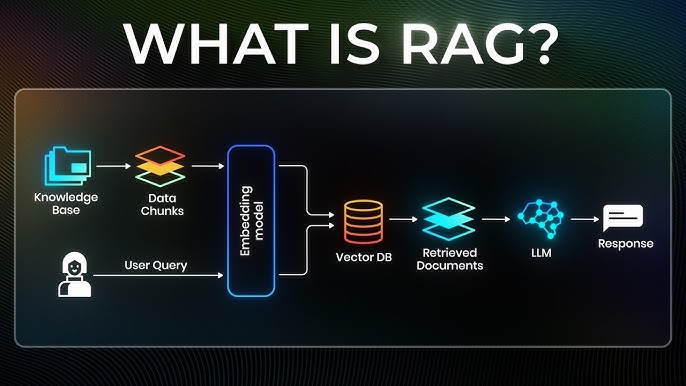
Over the past few weeks, we’ve taken some deep technical dives on this blog. We built a Retrieval-Augmented Generation (RAG) pipeline in Node.js, scaled databases using consistent hashing and sharding, and broke down the calculus and matrix multiplication that make neural networks work.
But today, I want to step back from the terminal.
As a developer living and working in Mohali, Punjab, I spend a lot of time writing code, setting up API endpoints, and watching the tech industry evolve. Lately, it feels impossible to browse the internet, read the news, or open a code editor without being bombarded by the term “Artificial Intelligence.”
To the general public, AI is either a magical oracle that can write poetry and generate photorealistic images in seconds, or a looming, sci-fi threat destined to automate every human job by next Tuesday. To investors, it’s a trillion-dollar gold rush. To developers, it is a powerful set of APIs, neural weights, and vector databases.
But if we look past the hype cycles, the corporate marketing campaigns, and the panic-inducing headlines, what is the actual role of AI in our modern world? How is it quietly restructuring the fabric of our daily lives, our industries, our creative outputs, and our relationship with technology?
Let’s talk about it—not as algorithms and parameters, but as a human shift in how the world functions.
1. The Paradigm Shift: From Tools to Collaborators
For the entire history of human civilization, our relationship with technology has been built on a simple, predictable foundation: Command and Control.
TRADITIONAL COMPUTING: COMMAND & CONTROL
User Input ──> [ Strict Program Rules (Code) ] ──> Expected Output

AI COMPUTING: THE COLLABORATIVE LOOP
User Intent ──> [ Probabilistic Reasoning Engine ] ──> Dynamic Contextual Output
When you use a traditional tool—whether it’s a physical hammer, a printing press, or a spreadsheet software like Microsoft Excel—the tool is entirely passive. It has no agency. It does exactly what you tell it to do, cell by cell, line by line. If a program crashes or outputs an error, it is because a human developer wrote a bug in the code or a user entered the wrong input. The computer does not interpret your intent; it executes your literal instructions.
AI changes this dynamic entirely. We are transitioning from using software as a tool to interacting with software as a collaborator.
When you write a prompt for an LLM or use an AI coding assistant like GitHub Copilot, you aren’t writing explicit code commands. You are communicating your intent in plain human language. The system interprets that intent, evaluates its mathematical representation of language patterns, and generates a contextual solution.
This shift changes how we work. Instead of spending hours writing boilerplate code, configuring basic layouts, or sorting through raw datasets manually, we act as directors, editors, and curators. The AI does the heavy lifting of raw execution, while the human provides the direction, critical thinking, and domain expertise.
2. AI in the Professional Landscape: Augmenting vs. Replacing
The loudest debate surrounding AI is centered on job displacement. It’s a valid concern. Throughout history, automation has disrupted labor markets—the industrial revolution shifted workers from farms to factories, and computers automated typesetting, bookkeeping, and manual mathematical computation.
However, the role of AI in the workplace today isn’t a simple story of human replacement. It is a story of cognitive augmentation.
+-----------------------------------------------------------------------+
|                    THE COGNITIVE AUGMENTATION SPECTRUM                |
+-----------------------------------------------------------------------+
|                                                                       |
|   RAW EXECUTION            COGNITIVE LAYER          STRATEGIC DIRECTION|
|  (Repetitive Tasks)       (Synthesis & Drafts)      (Human Judgment)   |
|                                                                       |
|  ┌───────────────┐        ┌───────────────┐        ┌───────────────┐  |
|  │  Automated by │───────>│ Augmented by  │───────>│ Controlled by │  |
|  │   AI Systems  │        │   AI Tools    │        │  Human Expert │  |
|  └───────────────┘        └───────────────┘        └───────────────┘  |
|   - Data Entry             - Code Writing           - Goal Setting     |
|   - Log Sorting            - Document Summaries     - Ethical Checks   |
|   - Basic Transcription    - Initial Copywriting    - Client Empathy   |
|                                                                       |
+-----------------------------------------------------------------------+
The Software Engineering Perspective
Let’s look at my own field: software development. AI coding tools can generate functional React components, write SQL queries, and refactor legacy code in seconds. Does this mean software engineers are becoming obsolete?
Absolutely not. If anything, it makes our jobs more interesting.
Writing syntax (typing out curly braces, semicolons, and boilerplates) is the easiest and often most tedious part of programming. The hard part of software engineering is system design, logical architecture, understanding business requirements, and debugging complex distributed state issues.
An AI tool can write a function for you, but it doesn’t understand why that function needs to scale, how it fits into your database sharding strategy, or whether the user interface feels intuitive to a customer. AI frees developers from the mechanics of typing syntax so we can focus on building architecture.
Medicine and Healthcare
In healthcare, AI is acting as a second pair of eyes for doctors.
- Diagnostics: Convolutional Neural Networks (CNNs) can analyze thousands of medical imaging scans (MRI, X-ray, CT scans) to spot early-stage tumors or cardiovascular anomalies with accuracy that matches or sometimes exceeds human radiologists.
- Drug Discovery: Traditionally, developing a new drug takes over a decade and billions of dollars in laboratory trial-and-error. AI models can simulate molecular structures and predict how proteins will fold, narrowing down potential drug candidates in days instead of years.
The AI doesn’t replace the physician. The doctor still makes the diagnostic call, sits with the patient, explains the treatment plan, and provides empathy. The AI simply gives the doctor better, faster data to make that call.
3. The Creative Frontier: The Collision of Math and Art
Perhaps the most unexpected development in the AI revolution has been its rapid expansion into the arts. For decades, sci-fi writers predicted that robots would take over physical manual labor first, leaving the creative realms of writing, painting, and music composition as the final, untouchable bastions of humanity.
Instead, the opposite happened. Generative models like Midjourney, Stable Diffusion, and Udio have made the creation of high-fidelity art, design, and music accessible to anyone with a web browser.
This raises a fascinating philosophical question: What is the role of AI in human creativity?
                       THE CREATIVE COLLABORATION

     Human Ideation ──> Prompt / Intent ──> AI Generation
           ▲                                      │
           │                                      ▼
           └─────────── Feedback & Iteration ─────┘
Some argue that AI-generated art is a form of theft, built on the scraping of millions of human-created images without consent. Others view it as a brand new medium—an evolution of paintbrushes, cameras, and digital synthesizers.
When photography was invented in the 19th century, many painters panicked. They claimed that a machine capturing reality with the click of a button would destroy the fine arts. Instead, photography liberated painters from the chore of strictly reproducing reality, giving birth to Impressionism, Cubism, and modern abstract art. It also turned photography itself into an acclaimed art form.
AI tools operate similarly. An AI image generator doesn’t possess personal experiences, pain, joy, or existential dread—the emotions that drive genuine art. It can generate beautiful textures and lighting, but the intent, the concept, and the message still originate from the human prompt engineer who curates, guides, and refines the output.
4. Quiet Infrastructure: The AI You Don’t See
When we think of AI, we picture ChatGPT or humanoid robots. But the vast majority of AI in the modern world is completely invisible. It runs silently in the background of our digital infrastructure, making decisions that shape our realities every day.
                           THE INVISIBLE WEB OF AI
                                      │
         ┌────────────────────────────┼────────────────────────────┐
         ▼                            ▼                            ▼
   ALGORITHMIC FEEDS             SUPPLY CHAINS                CYBERSECURITY
   - Recommends Videos           - Predicts Stock Needs       - Detects Fraud
   - Filters News                - Routes Delivery Trucks     - Blocks DDOS attacks
   - Shapes Opinion              - Minimizes Waste            - Filters Spam
Algorithmic Curation
Every time you open YouTube, Instagram, Spotify, or Netflix, a recommendation engine (a specialized neural network) decides what content you see next. It analyzes your historical watch time, click-through rates, mouse hovers, and search queries to build a profile of your psychological preferences.
This hidden AI essentially shapes our cultural landscape, dictating which news stories go viral, which songs become hits, and how political opinions are formed.
Global Logistics and Supply Chains
AI manages the physical flow of goods across the globe. Shipping companies use machine learning models to predict weather patterns, optimize shipping routes, and forecast inventory demands.
- If a supermarkets chain in Europe knows exactly how many crates of Punjabi mangoes to import next week to avoid waste, it is because an AI model analyzed historical sales data, weather forecasts, and transit times.
Cybersecurity and Financial Fraud
Behind every credit card transaction is a silent AI agent running anomaly detection. If you live in Mohali and your credit card is suddenly used to buy a luxury watch in New York, an AI model calculates the probability of fraud in less than 50 milliseconds, automatically freezing the transaction before the funds leave your account.
5. The Double-Edged Sword: Challenges, Ethics, and the AI Divide
We cannot talk about the role of AI without addressing its dark side. As developers, we have a responsibility to understand not just how to build these systems, but the societal costs they introduce.
The Problem of Bias and “Garbage In, Garbage Out”
Neural networks learn from historical data. If the historical data we use to train a model contains human biases, prejudices, or systemic inequalities, the AI will learn those biases as absolute mathematical truths.
- Examples: AI recruitment tools trained on historical resumes have been shown to penalize female candidates because the historical data consisted mostly of male hires. Algorithmic policing models can perpetuate racial disparities if they are trained on biased arrest records.
AI does not have a moral compass. It only reflects the mirror of our past back at us.
The Commoditization of Trust (Deepfakes and Misinformation)
As generative models for video, voice, and text become indistinguishable from reality, our collective ability to trust digital media is breaking down.
- The Danger: A bad actor can clone a politician’s voice, generate a fake video of a CEO making a statement, or run automated bot farms that flood social media platforms with highly convincing, divisive political misinformation.
As developers, we must focus heavily on building verification systems—like digital signatures, cryptographic watermarks, and decentralized verification protocols—to protect the integrity of digital information.
The Environmental Cost of Compute
Training and running modern AI models requires massive data centers filled with thousands of energy-hungry GPUs. The electricity and water (for cooling) required to run these server farms are skyrocketing. A single search query using an LLM consumes significantly more electricity than a traditional Google search. As we scale these systems, building energy-efficient algorithms and exploring green computing infrastructure is no longer optional.
6. What Lies Ahead: The Era of Agentic AI and AGI
As we look toward the future, the role of AI is transitioning from passive assistants to autonomous agents.
In our current paradigm, you prompt an LLM, and it gives you a response. In the Agentic Paradigm, we give the AI a high-level goal, and it plans its own sub-tasks, uses external software tools, checks its own work, and runs execution loops until the goal is met.
                  THE EVOLUTION OF INTERACTIVE AI

     Reactive AI (2023)              Agentic AI (Present-Future)
        ┌──────────┐                     ┌──────────┐
        │  Prompt  │                     │  Goal    │
        └────┬─────┘                     └────┬─────┘
             ▼                                ▼
        ┌──────────┐                     ┌──────────┐
        │ Response │                     │  Plan    │
        └──────────┘                     └────┬─────┘
                                              ▼
                                         ┌──────────┐
                                     ┌──>│ Exec.    │
                                     │   └────┬─────┘
                                     │        ▼
                                     │   ┌──────────┐
                                     └───│ Evaluate │
                                         └──────────┘
These agents will soon be capable of managing entire software development workflows, running automated marketing campaigns, coordinating logistics networks, and acting as personalized tutors for students.
Ultimately, this trajectory points toward Artificial General Intelligence (AGI)—a hypothetical AI system that can match or exceed human cognitive capabilities across a broad range of domains. Whether we reach AGI in five years or fifty, the path there requires us to think deeply about how we align these systems with human values, safety guidelines, and economic structures.
Conclusion: The Human Element
As a developer, learning the math behind neural networks and building AI integrations has shown me one thing clearly: AI is a mirror of human intelligence, not a replacement for it.
AI can write, code, analyze, and simulate at speeds no human could ever match. But it cannot feel, it cannot dream, and it doesn’t understand the human context of the problems it is solving.
The role of AI in the modern world is to act as a catalyst. It accelerates our workflows, automates our repetitive tasks, and opens up new dimensions of engineering and creativity. But the responsibility to direct this technology, to check its outputs, and to apply it ethically to improve human lives remains entirely ours.
How are you integrating AI into your daily life and workflows? Do you view it as a collaborative partner, or are you concerned about its long-term direction?
Let me know your thoughts in the comments below!

25 year old AI & MERN Stack Developer based in Mohali, Punjab, India, with a strong interest in system design, Artificial Intelligence, Large Language Models (LLMs), and scalable software architecture. Passionate about building innovative, intelligent, and high-performance applications.