OpenAI’s Screenless Smart Speaker: Cool Tech, or a Privacy Nightmare?

Hey everyone, Divyanshu here. If you read my last post, you know I’ve been digging past the usual CRUD apps I build in the MERN stack to understand how Agentic AI actually functions under the hood.
This week, some wild leaks dropped about OpenAI’s hardware plans. Bloomberg reported that OpenAI is quietly building a portable, screen-free smart speaker designed to be a “proactive companion” for your home. It’s meant to be a physical manifestation of ChatGPT that you carry from room to room—helping you in the kitchen, hanging out in the laundry room, and organizing your life.
But here’s the kicker: it has moving mechanical parts to make it feel “alive,” uses cameras and sensors to map your house, reads your emails, and proactively talks to you without waiting for a wake word.
As a web developer diving into AI agents, this news immediately got me thinking about the technical architecture, the user experience, and the massive privacy challenges of bringing a proactive agent into the physical world. Let’s break down what’s going on.
The Tech: GPT-Live and “Proactive” Agents
Right now, if you use Alexa, Google Home, or Siri, you’re dealing with a reactive system. You say a wake word, give a basic command (“set a timer for 10 minutes”), and it executes.
OpenAI wants to flip this script. They want their speaker to be a proactive companion. It uses an unreleased voice engine called GPT-Live—a beefed-up version of ChatGPT’s Advanced Voice Mode that can listen and speak simultaneously, interrupt naturally, and process environmental context in real-time.
Instead of waiting for you to ask a question, the device uses cameras, sensors, and access to your personal data (like emails and calendars) to anticipate your needs:
- It might notice you walking into the kitchen with groceries and suggest a recipe based on what’s on the counter.
- It might remind you to start the laundry because it knows you have a calendar event in an hour.
- To make it feel less like a plastic cylinder and more like a companion, the device reportedly includes moving mechanical elements designed by Jony Ive’s firm (LoveFrom), giving it a physical presence that reacts to you.
The MERN vs. Agentic AI Angle: Where’s the Data Going?
When we build web apps in the MERN stack, managing state is straightforward. If a user logs in, we save their session, read their database profile, and render the dashboard.
But a proactive physical agent takes state management to a whole new level:
- Local Context vs. Cloud Processing: For an agent to be truly proactive, it needs a continuous stream of audio, visual, and personal data. Is this processing happening locally on the edge (on the device itself), or is it streaming video and audio feeds of your living room directly to OpenAI’s servers?
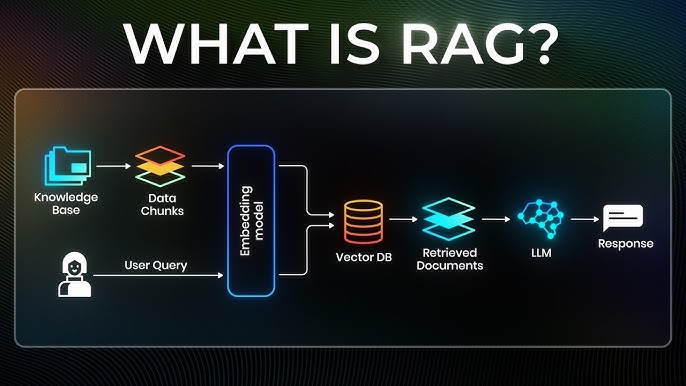
- Dynamic Vector Databases & Memory: To act as an “expert on you,” the speaker has to build a long-term memory graph. It needs to store semantic vector embeddings of your daily routines, your preferences, and your household relationships. Keeping this synced, secure, and instantly queryable is a massive engineering challenge.
- The User Controls (or Lack Thereof): OpenAI hasn’t explained how users will toggle privacy settings. Can we block the camera while keeping the voice agent active? How do we audit what context the agent used to make a proactive suggestion?
The Industry Battle: OpenAI vs. Apple & Amazon
OpenAI’s move into consumer hardware puts it on a direct collision course with tech giants who have ruled the smart home for a decade:
- Amazon’s Countermove: Amazon is already preparing Alexa+, a next-gen assistant powered by their own LLMs that can hold free-flowing conversations, manage complex smart-home routines, and read your documents/emails.
- Apple’s Robotic Screen: Apple is reportedly working on a smart-home command center with a screen attached to a robotic arm that moves to face you.
- The Legal War: Apple is actually suing OpenAI right now, alleging they used trade secrets to jumpstart their hardware division (claiming OpenAI hired away over 400 Apple employees, including design legends from Jony Ive’s team). OpenAI is aiming to reveal the speaker later this year for a planned 2027 release, but this legal battle could easily push that timeline back.
My Developer Takeaway: The UX of Agency
As developers, we often design interfaces assuming the user initiates every action (clicking a button, submitting a form). Agentic AI changes the design pattern completely. The system has to decide when to initiate an interaction, how to interrupt a human politely, and how much context to leverage without sounding creepy.
Personally, I’m fascinated by the engineering behind GPT-Live and the mechanics of a moving, screenless computer. But as a developer who understands how data pipelines work, I’d want to see absolute transparency on local data storage and offline processing before letting an active camera-equipped ChatGPT agent roam my house.
What do you think? Would you let a proactive, screenless ChatGPT speaker manage your home, or does the access to your daily life feel like a step too far?
Let me know in the comments!

25 year old AI & MERN Stack Developer based in Mohali, Punjab, India, with a strong interest in system design, Artificial Intelligence, Large Language Models (LLMs), and scalable software architecture. Passionate about building innovative, intelligent, and high-performance applications.