LLM Agents Explained: A Beginner’s Guide with Real-World Examples
Artificial Intelligence has evolved rapidly over the past few years. Traditional chatbots could answer questions, but they often struggled with tasks that required planning, decision-making, or interacting with external applications. Today, Large Language Model (LLM) agents are changing that.
Unlike a standard chatbot that simply responds to prompts, an LLM agent can reason about a problem, plan multiple steps, use tools such as web search or calculators, access databases, write code, and even collaborate with other AI agents to complete complex tasks.
In this article, you’ll learn what LLM agents are, how they work, their architecture, real-world applications, limitations, and why they’re becoming the foundation of the next generation of AI applications.
What Is an LLM Agent?
An LLM Agent is an AI system powered by a Large Language Model that can reason, plan, make decisions, and perform actions to accomplish a goal.
Instead of simply generating text, an agent can:
- Understand a user’s objective
- Break it into smaller tasks
- Decide which tools to use
- Execute those tools
- Evaluate the results
- Continue until the task is complete
Think of an LLM as the brain, while the agent provides the decision-making and action-taking capabilities.
For example, if you ask:
“Find the top five React interview questions, summarize them, create a PDF, and email it to me.”
A traditional chatbot might only list interview questions.
An LLM agent could:
- Search the web
- Extract relevant content
- Summarize the information
- Generate a PDF
- Send the email
- Notify you when finished
The difference is that the agent performs actions instead of only generating text.
How Is an LLM Agent Different from a Chatbot?
| Chatbot | LLM Agent |
|---|---|
| Answers questions | Completes tasks |
| Single response | Multi-step workflow |
| Doesn’t plan | Creates execution plans |
| Limited memory | Can maintain memory |
| No external actions | Uses APIs and tools |
| Passive | Autonomous |
Imagine asking both:
“Book me the cheapest flight to Delhi next Friday.”
A chatbot may suggest websites to visit.
An LLM agent could:
- Search flights
- Compare prices
- Ask for confirmation
- Complete the booking (if authorized)
Core Components of an LLM Agent
1. Large Language Model (The Brain)
The LLM is responsible for:
- Understanding instructions
- Generating responses
- Reasoning
- Making decisions
- Understanding context
Examples include GPT, Claude, Gemini, and Llama models.
2. Memory
Without memory, every conversation starts from scratch.
Memory enables an agent to remember:
- Previous conversations
- User preferences
- Earlier decisions
- Task progress
There are generally two types:
Short-Term Memory
Stores information during the current task.
Example:
User:
Create a travel itinerary.

Agent:
Destination?

User:
Japan.

Agent remembers the destination throughout the conversation.
Long-Term Memory
Stores information across multiple sessions.
Example:
Preferred programming language:
TypeScript

Preferred editor:
VS Code
The agent can personalize future interactions based on these preferences.
3. Planning
Complex goals require planning.
Suppose a user asks:
Build a portfolio website.
The agent might create this plan:
Step 1: Gather requirements

↓

Step 2: Design layout

↓

Step 3: Generate React components

↓

Step 4: Add styling

↓

Step 5: Deploy to Vercel
Planning allows the agent to solve problems systematically.
4. Tool Calling
LLMs don’t inherently know current weather, stock prices, or how to send emails.
Agents solve this by using tools.
Examples include:
- Web search
- Calculator
- Database
- Python interpreter
- Email service
- Calendar
- GitHub
- SQL database
- File system
For example:
User:
“What’s 458 × 932?”
Instead of guessing, the agent can use a calculator tool to compute the exact result.
5. Reasoning
Reasoning enables the agent to decide:
- What information is missing
- Which tool to use
- Whether the result is correct
- If another step is needed
For example:
Question:

Find today's weather and recommend clothing.

↓

Search weather

↓

Temperature = 8°C

↓

Recommend jacket and gloves
The agent combines retrieved information with reasoning to produce a useful response.
How an LLM Agent Works
A typical workflow looks like this:
User Request

↓

Understand Goal

↓

Plan Steps

↓

Choose Tools

↓

Execute Tool

↓

Observe Result

↓

Need More Work?

↓

Yes → Repeat

↓

No

↓

Return Final Answer
This iterative process allows the agent to adapt as it works through a task.
Real World Example
Imagine you’re planning a vacation.
You ask:
“Plan a 5-day trip to Japan with a budget of ₹1.5 lakh.”
The agent could:
- Search for flights
- Compare hotel prices
- Check weather forecasts
- Find tourist attractions
- Estimate transportation costs
- Create a daily itinerary
- Suggest restaurants
- Produce a travel budget spreadsheet
All these actions happen automatically under one high-level request.
Another Example: Coding Assistant
Imagine asking:
“Build a Node.js REST API using Express and MongoDB.”
The agent may:
- Generate project structure
- Write Express routes
- Create MongoDB models
- Add authentication
- Generate Swagger documentation
- Write unit tests
- Create a Dockerfile
- Explain deployment steps
Instead of answering one question, it delivers an end-to-end solution.
Popular Agent Architectures
1. ReAct (Reason + Act)
The ReAct pattern alternates between reasoning and action.
Think

↓

Search

↓

Observe

↓

Think

↓

Calculate

↓

Answer
This approach helps agents solve tasks step by step rather than jumping directly to an answer.
2. Plan-and-Execute
The agent first creates a complete plan, then executes each step sequentially.
This works well for long-running workflows like software development or research.
3. Reflection
After completing a task, the agent reviews its own work and improves it before presenting the final result.
This self-critique can lead to higher-quality outputs.
4. Multi-Agent Systems
Instead of relying on a single agent, specialized agents collaborate.
For example:
Manager Agent

├── Research Agent
├── Coding Agent
├── Testing Agent
└── Documentation Agent
Each agent focuses on its expertise, and a coordinator combines their outputs.
Real-World Applications
LLM agents are already being used in many domains:
Software Development
- Code generation
- Bug fixing
- Code review
- Documentation
- Test creation
Customer Support
- Answering customer queries
- Ticket classification
- Refund processing
- Escalating complex issues
Healthcare
- Summarizing medical records
- Scheduling appointments
- Assisting clinicians with documentation (under human oversight)
Finance
- Expense categorization
- Financial reporting
- Fraud detection assistance
- Investment research support
Education
- Personalized tutoring
- Quiz generation
- Assignment feedback
- Learning recommendations
Research
- Literature review
- Data collection
- Summarization
- Citation organization
Popular Frameworks for Building LLM Agents
Several frameworks simplify agent development:
- LangGraph – Build stateful, graph-based agent workflows.
- LangChain – Connect LLMs with tools, memory, and external data.
- CrewAI – Coordinate teams of specialized AI agents.
- AutoGen – Create collaborative conversations between multiple agents.
- OpenAI Agents SDK – Build production-ready agents with tool integration and orchestration.
Each framework addresses different use cases, from simple assistants to complex multi-agent systems.
Benefits of LLM Agents
Organizations adopt LLM agents because they can:
- Automate repetitive work
- Handle complex workflows
- Save time
- Reduce manual effort
- Integrate with existing software
- Improve productivity
- Scale across many users
Instead of requiring constant human direction, agents can carry out sequences of actions with minimal supervision.
Challenges and Limitations
Despite their capabilities, LLM agents are not perfect.
Some common challenges include:
Hallucinations
An agent may confidently produce incorrect information if it lacks reliable data.
Cost
Complex workflows involving multiple model calls and tool executions can become expensive.
Latency
Tasks requiring many reasoning steps may take longer to complete.
Security
Granting agents access to email, databases, or production systems requires careful authentication, authorization, and auditing.
Tool Reliability
If an external API fails or returns incorrect data, the agent’s output may suffer.
Memory Management
Storing too much context can increase costs, while storing too little can make the agent lose track of important information.
If you’re developing an agent:
- Keep tools focused on a single responsibility.
- Validate tool outputs before acting on them.
- Limit permissions using the principle of least privilege.
- Add human approval for high-risk actions such as financial transactions.
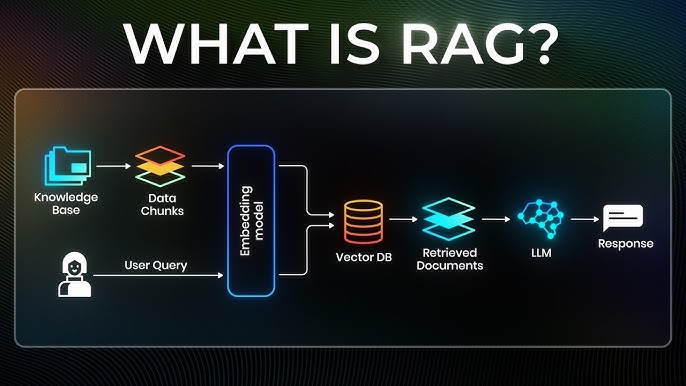
- Use retrieval (RAG) to provide accurate, up-to-date knowledge.
- Log actions for debugging and monitoring.
- Design prompts that clearly define goals and constraints.
- Evaluate agents with real-world tasks, not just benchmark examples.
The Future of LLM Agents
The future of AI is shifting from systems that simply answer questions to systems that complete work.
We are likely to see agents that can:
- Collaborate with humans and other agents.
- Manage long-running projects.
- Learn from feedback over time.
- Interact with enterprise software.
- Automate increasingly complex business processes.
- Operate across text, images, audio, and video in a unified workflow.
As models become more capable and tool ecosystems mature, LLM agents are expected to play a central role in software development, customer service, healthcare, education, research, and many other industries.

25 year old AI & MERN Stack Developer based in Mohali, Punjab, India, with a strong interest in system design, Artificial Intelligence, Large Language Models (LLMs), and scalable software architecture. Passionate about building innovative, intelligent, and high-performance applications.